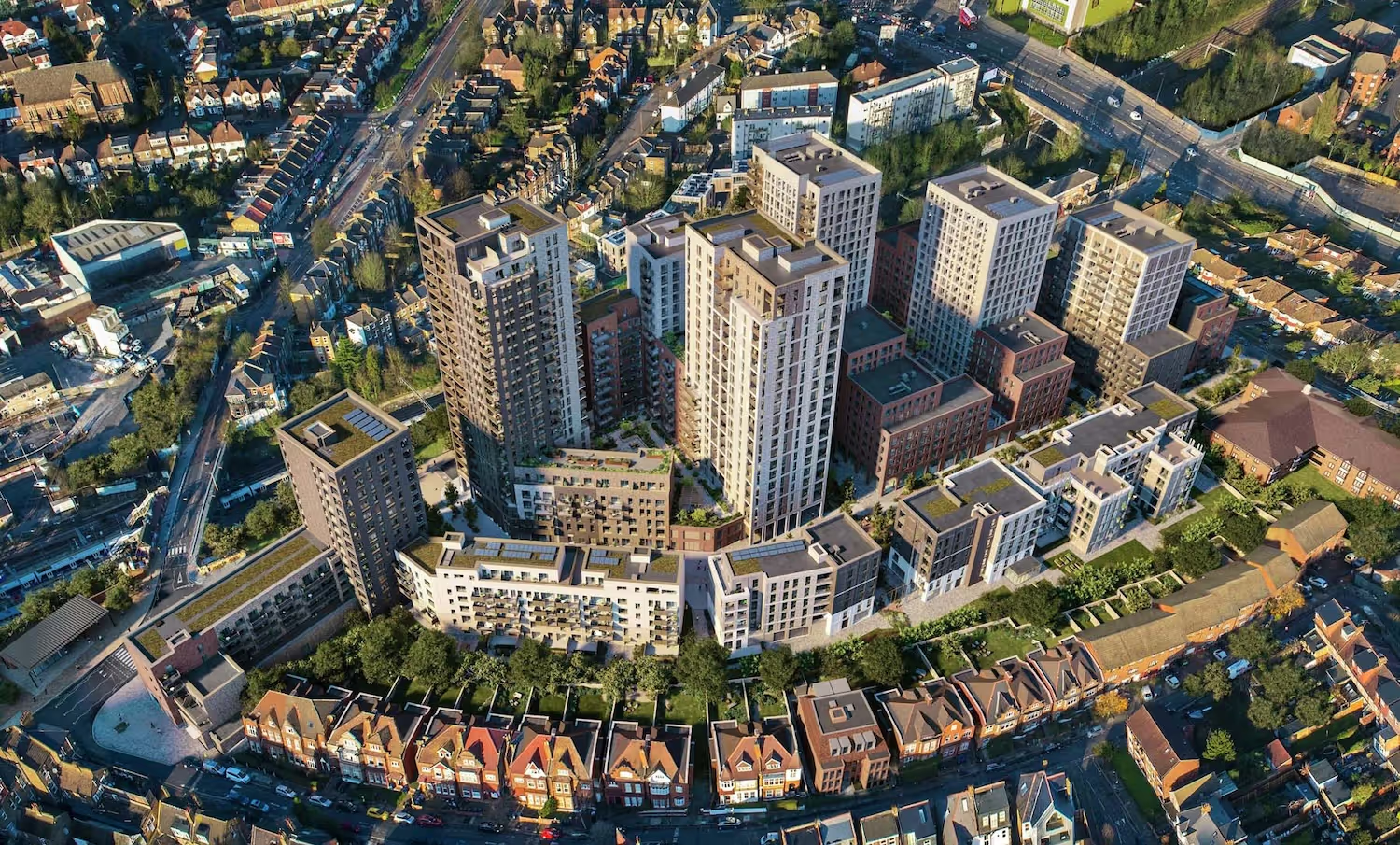
Yes. When one development cuts the light to several homes, each affected owner can hold a separate right to light claim, and the developer has to deal with all of them.
Picture a new block going up behind a Victorian terrace. It does not politely dim one bedroom and stop. The same wall takes light from four, five, maybe eight rear rooms across adjoining houses. Each of those owners has their own easement, their own windows, their own loss. A developer who settles with one neighbour has not solved the problem. The next door down is still there, still in the dark, still holding a claim. That changes the whole shape of the negotiation.
- Every affected owner holds their own right to light, not a shared one.
- A developer has to clear each claim separately to build safely.
- Owners who act together usually hold more leverage than owners who act alone.
Why does each neighbour get a separate claim?
A right to light is a private easement attached to a building, not to a street. It belongs to the land and passes with it when the property is sold. So if six houses sit behind a new development, there are potentially six distinct easements, each acquired over its own twenty years of uninterrupted light under section 3 of the Prescription Act 1832.
That matters because the developer cannot treat the row as a single obstacle to buy off in one go. Each window in each house has its own light, measured on its own terms. One owner might lose a kitchen to well below the 50/50 point on the 0.2% sky factor while the owner next door loses far less. The injuries are not identical, and neither are the claims.
Shared ownership structures complicate the picture. In a block of flats, the freeholder and individual leaseholders can each hold an interest in the same light, which we cover in more detail in our piece on multiple flats in one building. But across separate houses, the position is cleaner. Separate titles, separate easements, separate claims.
Does the developer have to settle with everyone?
To build with certainty, yes. A developer who presses ahead without clearing every credible claim is gambling that nobody will enforce.
That gamble has a name attached to it now. In Cooper & Powell v Ludgate House (High Court, 2025), the court awarded substantial damages to flat owners whose light was injured by a completed scheme. The developer had built, the building was finished, and the court still made them pay. Multiply that risk across a terrace and the maths gets uncomfortable for the person holding the crane.
So the developer has a choice. Settle each claim, or leave an exposed flank. An unsettled owner can still seek an injunction, and the threat of a cut-back does not vanish because the concrete has set. We explain that in our article on whether a finished building can be cut back. A row of owners who each refuse to be the weak link makes that flank very hard to close.
Are owners stronger together or apart?
Together, almost always. Not because the law pools the claims, but because leverage compounds.
Think about what the developer fears. One claim is a line item. Six coordinated claims, each properly evidenced, each funded, each capable of reaching court, is a structural threat to the scheme. The developer cannot pick off the cheapest settlement and hope the rest fold. If the neighbours are holding firm as a group, the whole project timeline is at risk.
There is a practical point too. A single rights of light analysis can map the injury across every affected home at once, using one surveyor and one Waldram analysis to show the pattern of loss down the row. That is more efficient and more persuasive than six owners commissioning six separate reports that may not even agree with one another.
A developer can live with one angry neighbour. A developer cannot ignore a whole street.
This is where coordination beats isolation. When owners negotiate separately, the developer controls the pace and the information. When owners act in step, the developer loses that control.
What happens if one neighbour settles early and the rest hold out?
The early settler takes an offer, signs a deed of release, and exits. The holdouts remain, and here is the uncomfortable truth: the early settler usually leaves money on the table.
Early offers are low for a reason. The developer wants to split the group, establish a cheap benchmark, and put pressure on everyone else to accept something similar. Once one owner signs, the developer points to that figure as the going rate. We set out why first offers rarely reflect real value in our guide to how compensation is really calculated.
Signing a deed of release is final. The light is gone, the claim is extinguished, and there is no coming back for more if the holdouts later secure a far better settlement. So the decision to break ranks carries a real cost, and it should never be made on the strength of an early letter alone.
For the owners who stay, an early settlement by one neighbour does not destroy their position. Their easements are untouched. Their windows still lose light. Their leverage, if anything, may rise, because the developer now has fewer exits and a visible deadline pressing on the build.
How does timing affect a group of claimants?
The strongest moment for a group is before the development completes. That is a legal reality, not a sales line.
Courts weigh conduct and delay when deciding whether to grant an injunction or award damages instead. The principles from the Shelfer test, reaffirmed in Coventry v Lawrence, give a court real discretion. Owners who act promptly, while the scheme can still be adjusted, keep the injunction route alive. Owners who sit on their rights risk being told that damages are the only remedy left, which hands the developer the cheaper outcome. Our article on what Heaney teaches about delay walks through how that plays out.
For a group, timing has a second edge. If several owners act together early, the developer faces coordinated pressure at the exact point when the scheme is most vulnerable to change. Act late, scattered and one at a time, and that advantage evaporates.
Common questions
Do all the neighbours have to use the same legal team?
No, but there is a strong practical case for coordination. One surveyor can assess the whole row in a single rights of light analysis, and a unified approach stops the developer from playing owners off against each other. Each owner still makes their own decisions about their own claim.
Can a developer force the group to accept one combined settlement?
No. Each easement is separate, so each owner settles on their own terms and signs their own deed of release. A developer may prefer a single global deal, but no owner is obliged to accept one, and nobody can be bound by a neighbour's decision to settle.
What if only some of the houses have acquired a right to light?
Then only those houses have a claim. A right to light is usually acquired after twenty years of uninterrupted light, so a newer property, or one affected by a Light Obstruction Notice, may have no enforceable right. Each home has to be assessed on its own history before anyone can rely on it.
If a single scheme is dimming your street, the sensible first move is to find out, honestly, who actually has a claim and how the injuries differ house by house. Some neighbours will have a strong position. Some may have none. Knowing which is which, early, is what turns a scattered row into a coordinated group with real weight behind it.
This article is general information about the law in England and Wales, not legal advice. Outcomes always depend on the facts.
Joshua Platt BSc (Hons) MRICS, Director, Daylight Protect
Daylight Protect is a rights of light claims specialist operating across England and Wales. We provide a fully funded solution that covers everything end to end, the surveyor, the solicitor, counsel and court fees, backed by legal insurance that covers the developer's costs if a claim does not succeed. There is no recovery, no fee, and no costs to you either way. We tell you plainly when you have a claim, and just as plainly when you do not.
Similar insights