Yes. A tenant and a landlord can both hold an interest in the same lost light, and both may have a claim worth pursuing. They are claiming different things, over different periods, and that distinction shapes everything that follows.
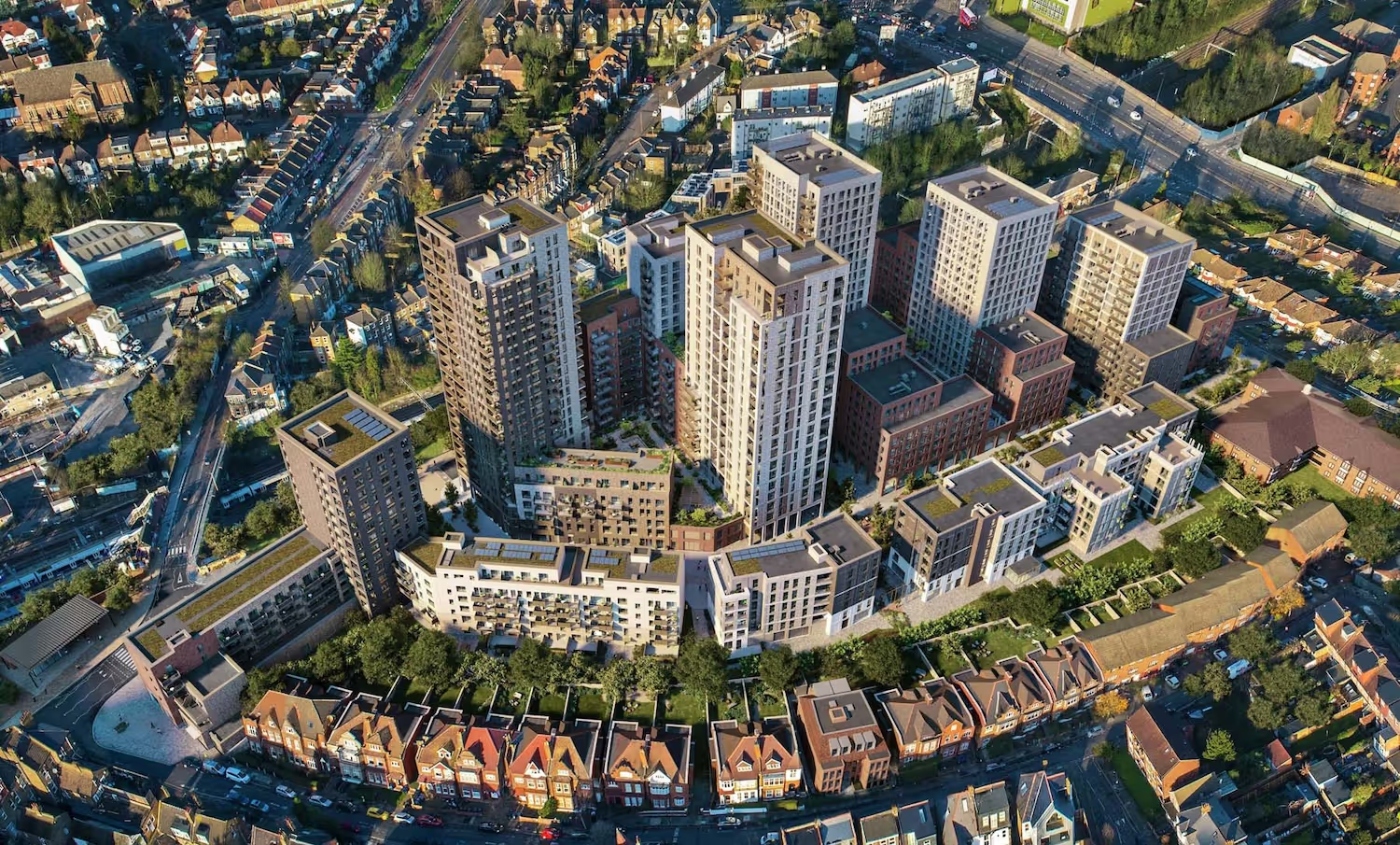
Picture a Victorian building split into a shop at street level and offices above, all let on separate leases, with a freeholder who hasn't set foot inside for years. A tower goes up behind it and the rear rooms dim. The freeholder owns the easement. The tenants hold the leases that give them day-to-day use of the rooms losing light. When a developer sits down to settle, it is not dealing with one owner. It is dealing with a stack of interests, and each one is a reason to pay.
The key points:
- The easement attaches to the land, so the freeholder's long-term interest survives any lease.
- A tenant with a sufficient leasehold interest can hold a claim in their own right.
- A developer usually has to satisfy every interest, not just the freeholder's.
Who actually owns the right to light?
The easement belongs to the land, not the person. A right to light is a property right that runs with the building, acquired after twenty years of uninterrupted enjoyment under section 3 of the Prescription Act 1832. It does not reset when a tenant moves in or out.
That means the freeholder holds the underlying easement. Their interest is in the building as an asset: its capital value, its rental yield, its appeal to a future buyer. If the rear offices go gloomy and harder to let, the freeholder feels it in the reversion.
But ownership of the easement is not the same as the right to act on an interference. A tenant occupying the affected rooms has a real, present loss too. The law recognises that, which is why the question is rarely as simple as pointing at whoever is named on the title.
Can a tenant bring a claim in their own name?
A tenant can bring a claim where their leasehold interest is substantial enough to be worth protecting. Courts have long accepted that a leaseholder in occupation of the rooms losing light has standing, because they hold a legal estate in the land and suffer the actual interference.
The length of the lease matters. A tenant on a twenty-five year commercial lease with fifteen years left has a meaningful stake. A tenant on a rolling monthly arrangement has very little, because their loss is fleeting and a court is unlikely to grant anything beyond token damages. The right to light may belong to the land, but the remedy follows the person who can show real injury to a real interest.
This came up squarely in Midtown Ltd v City of London Real Property Co Ltd [2005] EWHC 33 (Ch), where the court weighed the positions of both the freehold and leasehold interests in commercial premises. The lesson is that a tenant is not a bystander. Where the lease has teeth, so does the claim.
What does a landlord get that a tenant does not?
A landlord's loss is measured over the whole life of the building, where a tenant's loss ends when the lease does. That is the practical divide.
If a development dims a let office for the next forty years, the freeholder loses value for all forty. The tenant who has eight years left loses light for eight. When damages are negotiated, that difference in time horizon usually means the freehold interest carries the larger figure, because the injury to it is permanent and the injury to the leasehold is temporary.
There is also the question of what each party can do with a settlement. A freeholder can grant a deed of release that permanently frees the developer from the easement, because they own it. A tenant cannot release something they do not own. They can settle their own claim for interference during the lease term, but the underlying easement stays with the land for the freeholder to deal with.
Why a developer usually has to satisfy both
A developer who settles only with the freeholder has not cleared the risk. The tenant in occupation can still bring a claim for interference with their own enjoyment, and a developer that ignores that exposes itself to a second front.
This is where the stack of interests becomes leverage. Each party with a protectable interest is a party who can, in principle, ask a court for relief. And the remedy a court can grant is not only money. Under the Shelfer principles, restated by the Supreme Court in Coventry v Lawrence [2014] UKSC 13, an injunction remains the starting point for an interference with a property right. A developer facing multiple claimants, any one of whom might secure an injunction, is facing real pressure to settle with all of them.
That pressure only exists if the claims are credible and backed by the ability to go to court. A letter from an occupier the developer suspects will never litigate carries little weight. A funded claim, ready to issue, carries a great deal. The Shelfer test is what gives both tenant and landlord their negotiating position, and Heaney shows how courts have been willing to order even completed buildings cut back where the interference is serious and the claimant acted in time.
How the two claims are coordinated in practice
In a building with multiple interests, the sensible approach is to assess the whole picture before anyone sends a letter. A rights of light analysis measures the loss room by room, and from that you can see which rooms fall to which lease and how the freehold reversion is affected overall.
Sometimes the interests align neatly and can be advanced together. A freeholder and a long leaseholder both want the development stopped or paid for, and a coordinated claim is stronger than two separate ones pulling in different directions. Other times they diverge. A freeholder may be content to take a payment and release the easement, while a tenant wants the building itself changed so their offices are usable for the rest of the term. Those are different objectives, and they need handling with care so one party's settlement does not undercut the other.
What you should not do is assume the question of standing is obvious. The same development can trigger a strong freehold claim and a weak leasehold one, or the reverse, depending on lease lengths, which rooms are affected and how the building is occupied. The way compensation is calculated turns on exactly these details.
Common questions
If I rent my flat, can I claim for lost light myself?
It depends on your lease. A long leaseholder with many years remaining and occupation of the affected rooms can usually claim in their own right. A short-term or monthly tenant has very little, because the loss is temporary and courts award accordingly. The freeholder's interest sits behind yours in either case.
Does the landlord need the tenant's permission to settle?
No, but a landlord settling and releasing the easement does not extinguish a tenant's separate claim for interference during the lease term. A careful developer wants both interests dealt with, which is why occupiers should not assume the freeholder's deal covers them.
What if the landlord does nothing?
A tenant with a sufficient interest does not have to wait for the freeholder to act. You can take advice on your own position. Timing matters, because delay narrows the remedies a court will consider, so a silent landlord is not a reason to sit still.
Where this leaves you
If a development is cutting the light to a building you own or occupy, the first job is to work out exactly what interest you hold and what it is worth. A freeholder and a tenant are not rivals here. More often they are two reasons a developer has to pay, and understood properly that is a position of strength rather than confusion.
Start by getting the light measured and the interests mapped before anyone commits to a letter or an offer. The order of events matters, and the party who understands their own standing negotiates from solid ground. You can start your claim assessment to find out where you stand.
This article is general information about the law in England and Wales, not legal advice. Outcomes always depend on the facts.
Joshua Platt BSc (Hons) MRICS, Director, Daylight Protect
Daylight Protect is a rights of light claims specialist operating across England and Wales. We provide a fully funded solution that covers everything end to end, the surveyor, the solicitor, counsel and court fees, backed by legal insurance that covers the developer's costs if a claim does not succeed. There is no recovery, no fee, and no costs to you either way. We tell you plainly when you have a claim, and just as plainly when you do not.
Similar insights