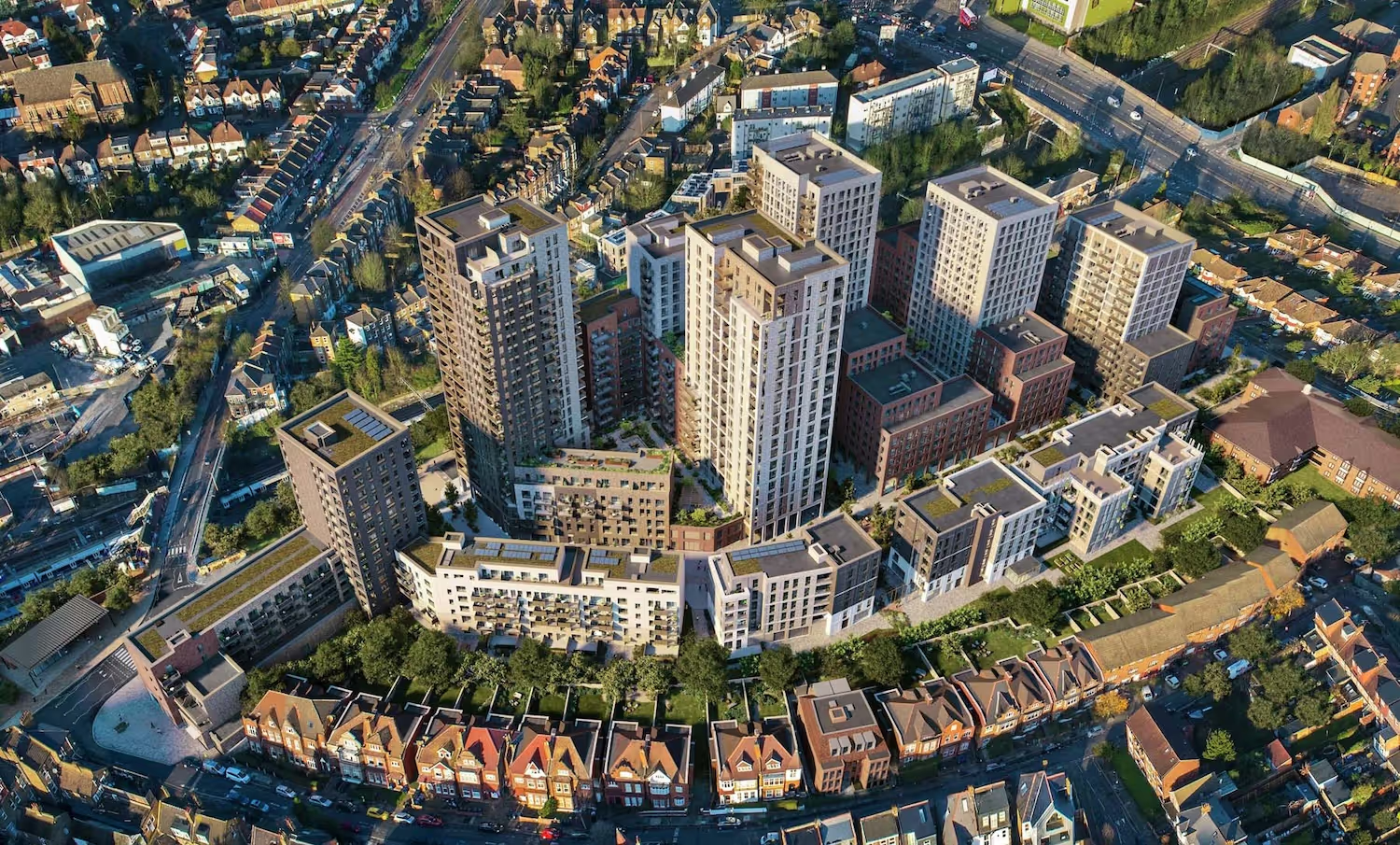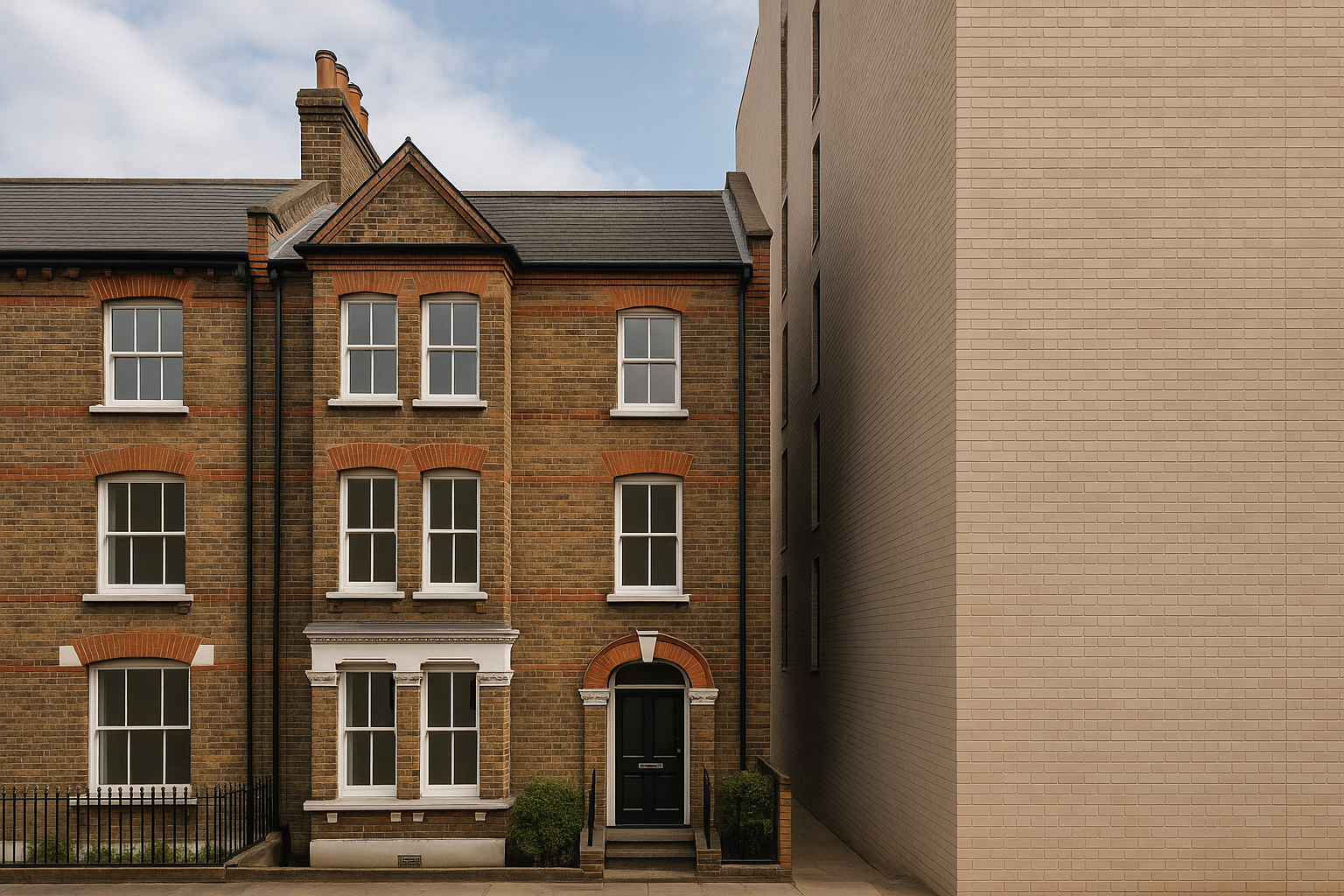
Yes. Each flat in a building can hold its own separate right to light, and each owner can bring their own claim in England and Wales. One building does not mean one right.
This surprises people. A development goes up next door, the whole block loses light across several floors, and the assumption is that the freeholder deals with it on everyone's behalf. That is not how the law works. A right to light attaches to a defined space with windows, not to a whole building as a single unit. If your flat has qualifying windows and they have lost enough light, you have your own claim, whatever your neighbours do about theirs.
- Each flat with qualifying windows can hold a distinct right to light.
- Freeholders and leaseholders can hold separate rights over the same building.
- Combined claims across a block change the settlement maths for a developer.
Why does each flat get its own right to light?
A right to light protects the light reaching a particular aperture, not the building as a bricks-and-mortar whole. The easement is measured room by room, window by window.
The right is acquired under section 3 of the Prescription Act 1832 after twenty years of uninterrupted light through defined windows. A first-floor flat and a third-floor flat in the same terrace look at the world through different windows at different heights. The light each one enjoys is different, and so is the right each one holds.
That means the analysis for a block of flats is not one calculation but several. A surveyor runs a separate rights of light analysis for each affected unit, working out how much light each room keeps and how much it loses. The building might lose light unevenly. Lower floors often suffer most because the new wall next door bites into their sky first. Upper floors sometimes escape almost untouched.
So the honest answer to "does the whole block have a claim" is: it depends which flat you live in. The Waldram analysis for your particular rooms is what settles it, not a glance at the building from the street.
Can leaseholders and the freeholder both claim?
They can, and often both do. A freeholder and a long leaseholder can each hold an interest in the light to the same flat, and each has standing to protect it.
In most blocks the individual flats are owned on long leases, and the freeholder retains the reversion and usually the common parts. The leaseholder occupies the flat and enjoys the light day to day. The freeholder owns the building and stands to lose value if the flats become darker and harder to let or sell. Both interests are real, and a developer settling a scheme has to account for both.
This can get layered. In a converted Victorian house split into four flats, you might have a freeholder, four leaseholders, and in some cases a residents' management company sitting in between. Each layer may have a stake in the light. We cover the mechanics of the split between owners in more depth in our piece on whether tenants or landlords hold the right, and the principle carries across to residential leases.
The practical point is simple. If you are a leaseholder, do not assume your freeholder is handling it. And if you are a freeholder, do not assume your leaseholders have it covered. Nobody is obliged to run the claim for anyone else.
How do multiple claims affect a settlement?
Several claims across one building change the negotiating maths, and usually in the claimants' favour. A developer facing one flat can weigh the cost of that one claim. A developer facing eight flats is looking at something closer to a wall.
Here is why that matters. Settlement in rights of light is driven by the risk of an injunction, the order that can stop or cut back a building. The courts still take that remedy seriously. In the Shelfer line of cases, running from Shelfer v City of London Electric Lighting Co right through to Coventry v Lawrence in the Supreme Court, an injunction remains the starting point where a legal right has been infringed, not an afterthought.
Now stack that risk across a whole block. If even one flat in a building of eight has a strong enough claim to threaten an injunction, the whole scheme is exposed. The developer cannot cut back a wall for one flat and leave it in place for the others. The building is one structure. That single strong claim can carry the weaker ones alongside it, because the developer needs releases from everybody to make the risk go away.
This is where the difference between a survey and a funded claim shows itself. Eight owners each writing a letter is eight letters. Eight owners backed by a single funded litigation team, ready to seek an injunction, is a credible threat to the scheme. As the courts confirmed in Cooper & Powell v Ludgate House (High Court, 2025), damages in these cases can run well into six figures where the developer has profited from the obstruction. Multiply the exposure across a block and the developer's appetite for a fight drops fast.
What should each owner actually do?
Coordinate, but claim in your own right. The strongest position for a block is a set of owners acting together while each retains their own distinct legal interest.
Acting together matters because a developer would much rather divide a building. Pick off the willing sellers early with low offers, isolate the holdouts, and the collective leverage evaporates. Owners who talk to each other and move as a group keep that leverage intact. Timing counts too. A claim is at its strongest before the development completes, because the closer a building gets to finished, the more a court weighs the waste of cutting it back. We explain that pressure in our article on acting while the scaffolding is still up.
But coordination does not mean surrendering your own right. Your flat's claim rises or falls on your flat's light. A neighbour who settles cheaply, or who has consented to the development in an old lease, does not bind you. Your own rights of light analysis is what defines your position.
Watch the title, too. Some leases and transfers contain a consent or a reservation that quietly gives away the right to light. One flat might be caught by such a clause while the flat next door is clean. This is one of the main reasons claims fail before they start, and it has to be checked flat by flat.
Common questions
If my neighbour in the same block settles, does that end my claim?
No. Your right to light is your own. A neighbour settling or releasing their claim has no effect on yours, because the two rights attach to different flats and different windows. You can carry on and pursue your own settlement on your own terms.
Does the freeholder decide for the whole building?
Not for the individual flats. A freeholder can act on their own interest and the common parts, but they cannot compromise a leaseholder's separate right to light without that leaseholder's agreement. Each interest is dealt with by the person who holds it.
Is a combined claim more expensive to run?
Under a fully funded model the cost is not the concern. The surveyor, solicitor, counsel and court fees are all covered, and there is nothing to pay unless a claim succeeds. A block of flats is more work, but for the owners the arithmetic of what they might pay does not change.
Where this leaves a block of flats
Picture a Victorian terrace converted into six flats, with a new residential scheme rising across the boundary. The two ground-floor flats lose a great deal of light. The middle floors lose some. The top flat barely notices. Six owners, six different positions, and one freeholder above them all.
The mistake would be to treat that as one problem for one person to solve. It is not. It is a set of individual rights that happen to sit in one building, strongest when the owners act together and each protects what is theirs. The ground-floor owners have the sharpest claims. The freeholder has an interest in the value of the whole. Handled properly, the strong claims lift the settlement for everyone with a genuine loss, and the developer has to deal with all of it before the scheme is safe.
This article is general information about the law in England and Wales, not legal advice. Outcomes always depend on the facts.
Joshua Platt BSc (Hons) MRICS, Director, Daylight Protect
Daylight Protect is a rights of light claims specialist operating across England and Wales. We provide a fully funded solution that covers everything end to end, the surveyor, the solicitor, counsel and court fees, backed by legal insurance that covers the developer's costs if a claim does not succeed. There is no recovery, no fee, and no costs to you either way. We tell you plainly when you have a claim, and just as plainly when you do not.
Similar insights