A live right to light claim does not disappear the moment you exchange contracts. It attaches to the land, so in most cases it passes to whoever owns the building, but the money already in play and the paperwork behind it can complicate a sale on either side.
You have found the house. Or you have accepted an offer on your own. Then a right to light matter surfaces, a scaffolding dispute with the development next door, a letter that arrived last spring, a solicitor's enquiry you did not expect. Now the question is simple and urgent. If the property sells, who keeps the claim, and who keeps any money?
The key points:
- A right to light runs with the land, not the person who owned it.
- Compensation already agreed usually belongs to the seller, not the buyer.
- Disclosure at the point of sale is where most problems start.
Who actually owns a right to light claim?
The right belongs to the building, not to you personally. A right to light is a private easement, a property right attached to the land and the windows that enjoy it. When you sell, the easement passes to the new owner along with everything else in the title.
That is why a claim is described as running with the land. The Prescription Act 1832 lets the right accrue over twenty years of uninterrupted use, and once it exists it is a feature of the property, not a personal entitlement you take with you when you move.
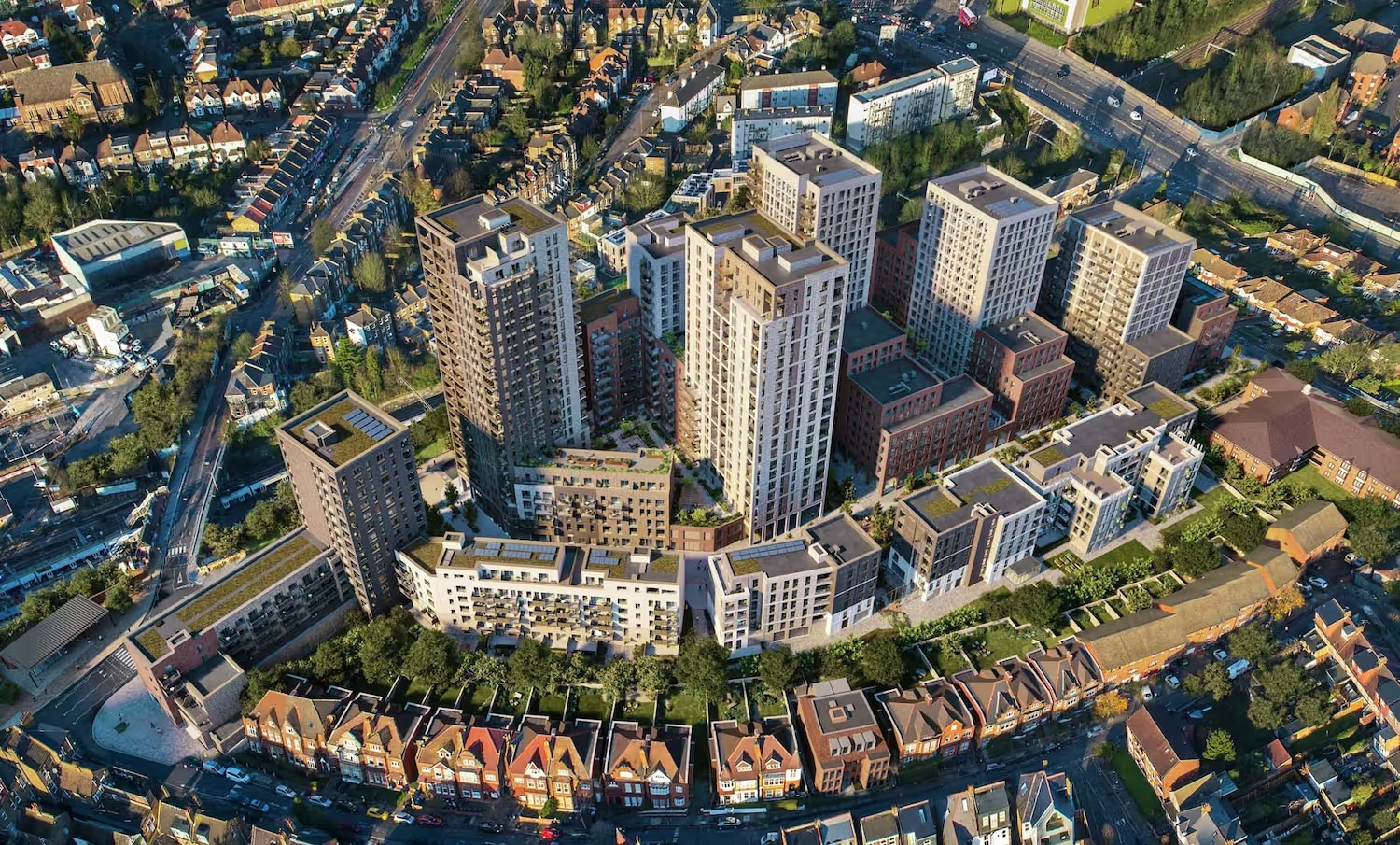
So if a development next door is threatening light to a rear kitchen, the person who owns that kitchen at the relevant moment is the person entitled to complain about it. Sell the house and you sell the standing to object.
The word to watch is when. Timing decides almost everything about who benefits.
What happens to the claim if you sell mid-matter?
If you sell before anything is agreed, the buyer inherits the claim and the leverage. They step into your shoes. They can pursue the developer, negotiate a settlement, or do nothing at all. The right came with the bricks.
This matters more than most sellers realise. If your rear windows have a strong claim against a neighbouring scheme, that is a live asset. Sell without accounting for it and you may hand a valuable negotiating position to your buyer for nothing.
The remedy also depends on stage. A claim is strongest before a development completes, because a court weighs an injunction most seriously while the obstruction can still be adjusted. Once the building is finished, the balance shifts towards damages, as the pattern running from the choice between an injunction and a payout shows. Sell during that window and the timing question passes to your buyer too. If you are the one buying, understanding what you can do while the scaffolding is still up next door is part of valuing what you are taking on.
Does the money follow the property or the seller?
Money already agreed usually stays with the seller. This is the split that catches people out. The easement passes with the land, but compensation crystallised before completion is a debt owed to the person who held the claim at that point, and it does not automatically transfer.
Put plainly. If you settle with a developer for a five-figure sum and then sell, that settlement is yours unless the sale contract says otherwise. The buyer takes the property in its diminished state and gets no share of what you were paid.
The friction appears when nothing is settled but everyone knows a claim exists. Then you and your buyer have to decide how to price it. Three routes are common, in order. First, you complete the claim before selling and keep the proceeds. Second, you assign the benefit of the claim to the buyer for an agreed adjustment to the price. Third, you sell silent on it and let the buyer take their chances, which is where disputes are born.
Whichever route you take, it belongs in the contract in writing. A vague understanding between two sets of solicitors is not a plan.
What do you have to disclose when you sell?
A seller must answer property enquiries honestly, and a known right to light dispute is squarely within them. The standard conveyancing enquiries ask about disputes and complaints affecting the property. A live claim, correspondence with a developer, or a Light Obstruction Notice registered against neighbouring land all fall inside that question.
Get this wrong and you are not just risking the sale. Misrepresentation on a property enquiry can follow you after completion, and a buyer who later discovers a concealed dispute has a route back to you.
If a developer has registered a Light Obstruction Notice under the Rights of Light Act 1959, that is a matter of public record and will surface on searches in any event. Trying to keep it quiet achieves nothing except suspicion.
What should a buyer check before committing?
A buyer should treat a nearby development as a live question, not a detail. If there is a large scheme going up next to a property you are buying, the state of the seller's light is part of what you are paying for, and part of what you might lose.
Ask three things, in order. First, has any correspondence passed between the seller and a developer about light. Second, is anything registered against neighbouring titles, a Light Obstruction Notice or otherwise. Third, has any settlement already been agreed, and if so, is any part of it being passed to you.
The honest answer is that a strong inherited claim can be an advantage. You may be buying a property with a legitimate, unresolved right to complain about a scheme next door. That is worth having, provided you understand what stage it has reached and whether the remedy is still an injunction or has slipped towards damages. It is also worth checking whether the right survives, because abandonment or altered windows can weaken what looks like a solid position.
Common questions
Can I still claim if I bought the house after the development started?
Often yes. The right passes with the land, so if the property had an established right to light and the obstruction is ongoing, you may have standing as the new owner. The stage of the development affects the remedy, so timing matters. A funded assessment will tell you plainly whether the claim is real.
Do I have to tell my buyer about a right to light letter I ignored?
Yes, if it relates to a dispute affecting the property. Property enquiries require honest answers, and a letter about a claim, even one you never acted on, is disclosable. Concealing it risks a misrepresentation claim after completion, which is a far worse outcome than an awkward conversation before it.
Can the seller keep compensation and still sell me the property?
Yes. If the seller settled a claim before completion, that money is generally theirs, and you buy the property as it stands. What you should establish is whether anything remains unresolved and whether any part of a future claim is being assigned to you. Price the position accordingly.
Where this leaves you
If you are selling, do not let a live claim leave the house for nothing. Decide before you market whether to resolve it, assign it, or price it, and put the decision in the contract. If you are buying, treat a neighbouring scheme as part of the deal and ask the three questions above before you commit.
The right runs with the land. The money usually does not. Knowing which is which, before contracts are exchanged, is the difference between a clean transaction and a dispute that outlives the sale. If you are unsure whether an inherited or pending claim is worth pursuing, a proper rights of light analysis will tell you where you stand. Start your claim assessment.
This article is general information about the law in England and Wales, not legal advice. Outcomes always depend on the facts.
Joshua Platt BSc (Hons) MRICS, Director, Daylight Protect
Daylight Protect is a rights of light claims specialist operating across England and Wales. We provide a fully funded solution that covers everything end to end, the surveyor, the solicitor, counsel and court fees, backed by legal insurance that covers the developer's costs if a claim does not succeed. There is no recovery, no fee, and no costs to you either way. We tell you plainly when you have a claim, and just as plainly when you do not.
Similar insights