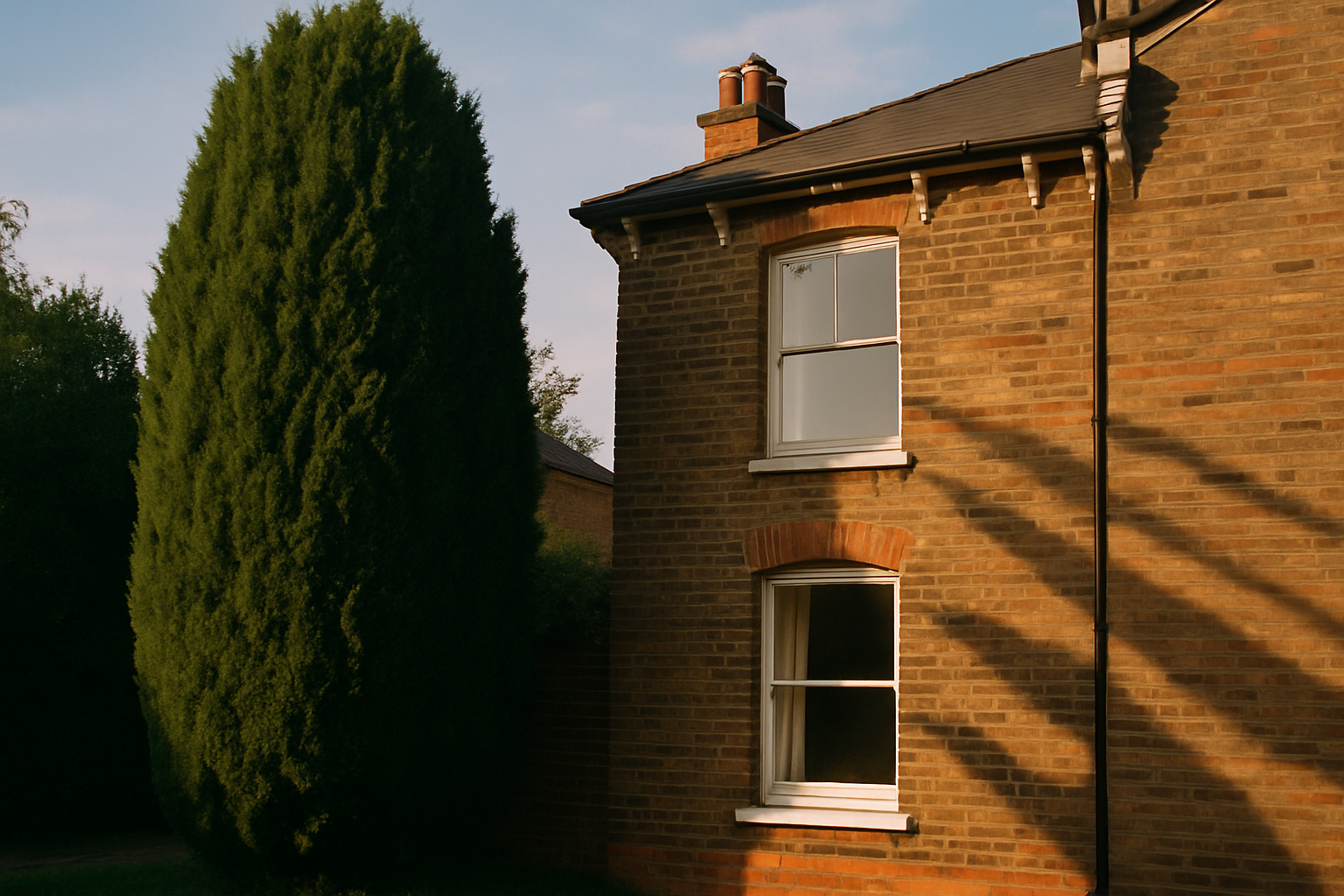
A hedge, a row of conifers or a fence next door cannot be the subject of a rights of light claim in England and Wales. The right to light protects the light coming through a specific window from being blocked by a building, not by planting or timber panels. So the leylandii shading your kitchen and the six-foot fence casting your patio into gloom sit outside the easement entirely.
That surprises people. The living room is darker than it was five years ago, the neighbour has done nothing about it, and it feels like a loss of light that the law should recognise. It is a real loss. It just is not the loss that a rights of light easement was ever built to protect. Knowing the difference tells you where to spend your energy and where you would only waste it.
The key points:
- Rights of light protect windows from buildings, not from trees, hedges or fences.
- High hedges have their own council-led route under separate legislation.
- A genuine building next door is a different matter with real remedies.
Why does a right to light not cover trees and hedges?
The right to light is an easement over defined apertures, and it works against obstructions that are structures. Its whole framework, running back to the Prescription Act 1832, is about enjoyment of light to a window over a long period, then a structure rising up to take that light away. A tree is not that structure.
The reasoning is practical as much as legal. A building has a fixed footprint and height you can measure, model and value. A tree grows, is pruned, drops its leaves in winter and can be felled tomorrow. The courts have never treated a living, changing thing as the sort of permanent obstruction the easement guards against. So when a surveyor runs a Waldram analysis of your room, they are measuring loss caused by built form. Foliage does not enter that calculation.
The Prescription Act itself, at section 3, speaks of light to a building enjoyed without interruption. Read it plainly and the subject is architecture, not horticulture.
What about a fence that was built too high?
A fence is closer to a building than a tree is, but it still rarely gives you a rights of light claim, and for a different reason. A boundary fence usually sits low and does little to a first-floor window that has any real light protection to lose. Most rights of light disputes turn on windows to habitable rooms, and a standard fence simply does not reach them.
There is a planning angle worth knowing. Under permitted development, a fence next to a highway generally cannot exceed one metre, and elsewhere two metres, without planning permission. A fence built higher than that may be unlawful, and your council can be asked to act. That is an enforcement question for the local planning authority, not a private right to light. It runs on a different clock and delivers a different outcome.
If the neighbour has erected a solid structure that is really a wall dressed up as a fence, and it takes meaningful light from a protected window, the analysis changes. Then you are back in easement territory, because you are dealing with built form after all. The label on the thing matters less than what it actually is.
Is there any legal route against a high hedge?
Yes, and it is separate from rights of light entirely. Part 8 of the Anti-social Behaviour Act 2003 created a formal complaints process for high hedges. If a line of two or more mostly evergreen or semi-evergreen shrubs or trees stands over two metres and blocks light to your home or garden, you can complain to your local council.
The route has teeth, but it is deliberately slow and conditional. You have to show you tried to resolve it with your neighbour first. You pay a fee to the council to consider the complaint. If the council agrees the hedge is a problem, it can issue a remedial notice requiring the neighbour to reduce or maintain it. It cannot order the hedge removed altogether, and it will not touch a single tree, however large.
You can read the government's guidance on the high hedges complaints process before you start. It is worth being honest with yourself about the timescale. This is a neighbour dispute handled by a council officer, not a light claim handled by a court, and the two feel very different in practice.
When is it actually a building, and what then?
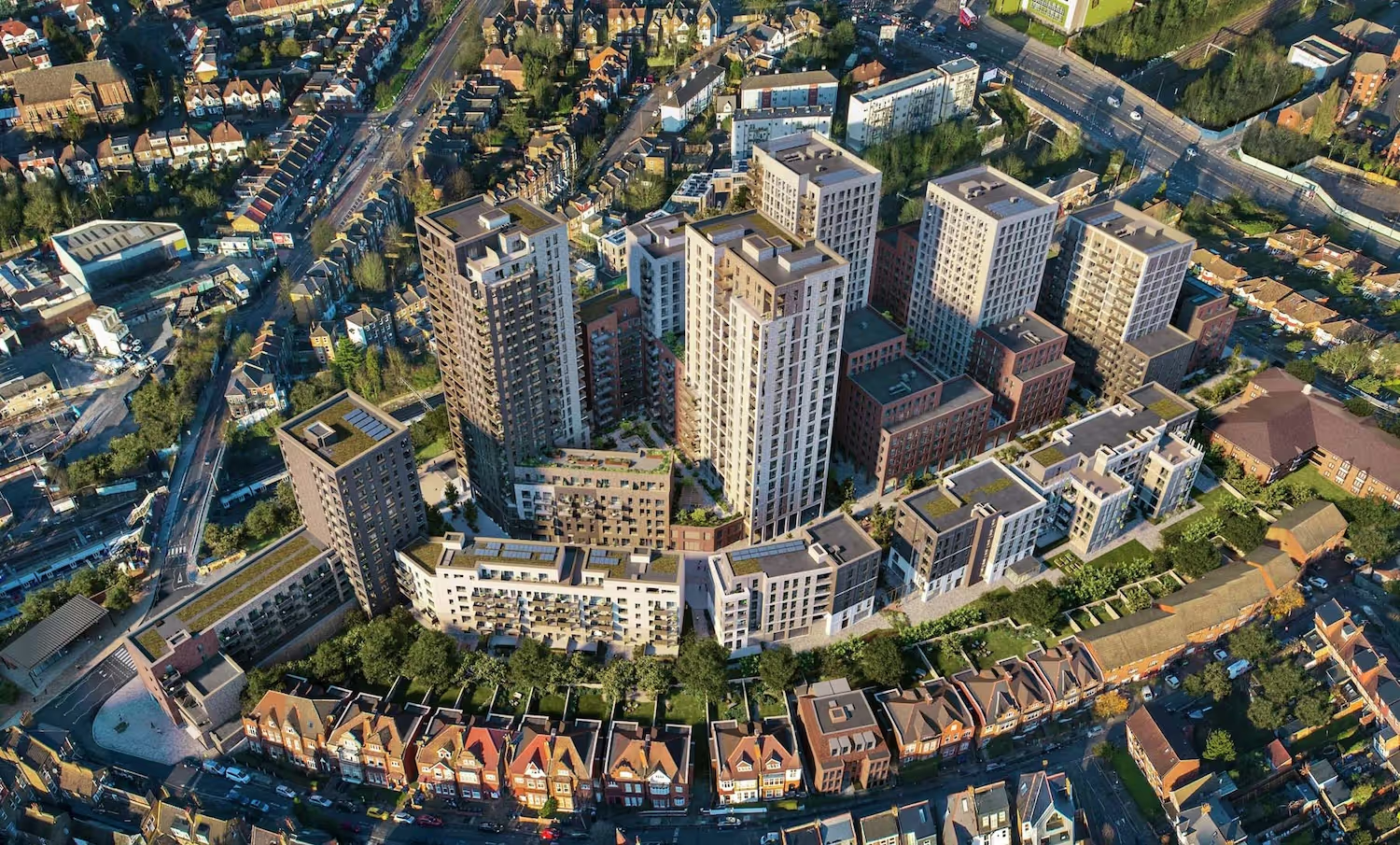
The moment your neighbour puts up something built, the whole picture shifts. A rear extension, a garden studio on foundations, an outbuilding tall enough to reach your windows, a wall running along the boundary. These are structures, and a structure that takes light from a window you have enjoyed for years is exactly what the easement addresses.
If you have had that window in place and lit for twenty years or more without interruption, you may hold a prescriptive right to the light passing through it. When a building then cuts that light below the level the law protects, you have something real. Not a nuisance to argue over the fence, but an enforceable private right with settlement value and, in the right facts, the shadow of an injunction behind it.
The distinction that catches people out is this. The neighbour who lets a hedge grow wild is a frustration you resolve through the council. The neighbour who builds is a legal opponent, and your position is strongest before that build completes. Delay narrows what a court will consider, which is why the timing of a build matters far more than the timing of a hedge. If you are unsure which situation you are in, a proper rights of light analysis will tell you quickly.
Common questions
Can I cut back branches that overhang my property?
You can trim branches and roots that cross the boundary onto your land, back to the boundary line, without asking permission. You do not gain a light claim by doing so, and you must offer the cuttings back to the owner rather than keep them. If the tree has a protection order or sits in a conservation area, you must get consent first, so check with your council before you start.
Does a right to a view exist if the light is fine but the outlook is gone?
No. English law has never recognised a right to a view or a pleasant outlook, only a right to light itself. A neighbour can build or plant in a way that ruins your view while leaving your protected light untouched, and you will have no claim on the loss of the view alone. The two are often confused, but they are quite separate.
What if the trees were planted deliberately to spite me?
Motive does not create a rights of light claim where none exists, because trees fall outside the easement whatever the reason for planting them. The high hedge process under the Anti-social Behaviour Act 2003 is your route, and it looks at the effect on your light rather than the neighbour's intentions. Spite may colour how a council officer views the case, but the legal test is the light lost, not the ill will behind it.
Where this leaves you
Start by naming the obstruction honestly. If it is a hedge, the council route under the 2003 Act is your path, slow but real, and it begins with a genuine attempt to talk to the neighbour. If it is a fence, ask whether it breaches the permitted development height limits and, if so, raise it with planning enforcement. If it is a tree, you may trim what overhangs your boundary, but there is no light claim to be made.
If it is a building, or something calling itself a fence that is really a wall, treat it as what it is. That is where a rights of light easement lives, where settlement value sits, and where acting early genuinely changes the outcome. The sooner you know which category you are in, the less time you waste chasing the wrong remedy.
This article is general information about the law in England and Wales, not legal advice. Outcomes always depend on the facts.
Joshua Platt BSc (Hons) MRICS, Director, Daylight Protect
Daylight Protect is a rights of light claims specialist operating across England and Wales. We provide a fully funded solution that covers everything end to end, the surveyor, the solicitor, counsel and court fees, backed by legal insurance that covers the developer's costs if a claim does not succeed. There is no recovery, no fee, and no costs to you either way. We tell you plainly when you have a claim, and just as plainly when you do not.
Similar insights