Rights of light secured for a community arts centre facing total loss of studio daylight
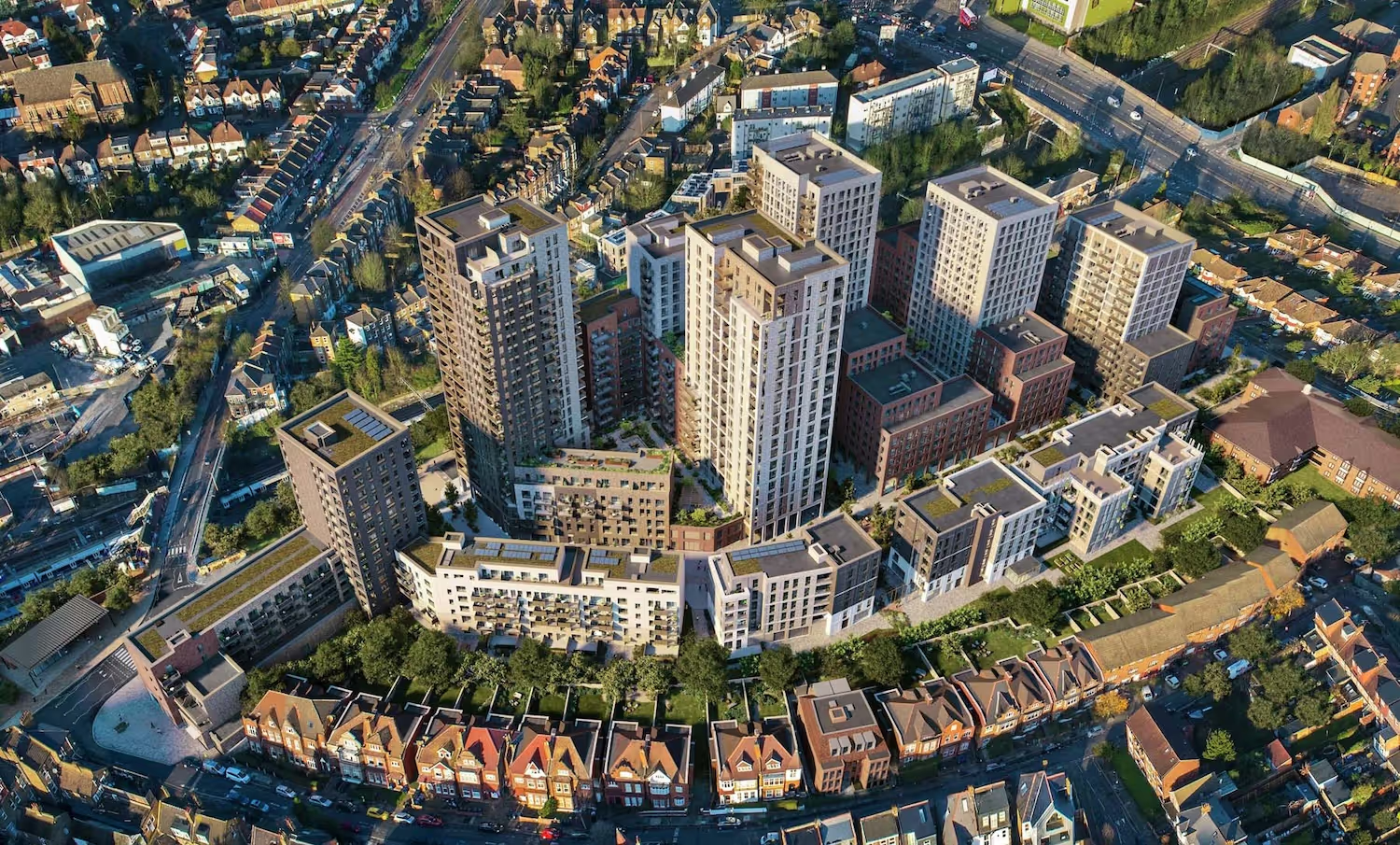
Our client operates a long-established community arts centre from a converted industrial building in a northern city. The premises include working studios, exhibition space, and a public gallery, all heavily dependent on natural light as both a practical and aesthetic requirement. A commercial developer acquired the adjacent site and commenced construction of a large mixed-use scheme without notifying our client or commissioning any rights of light assessment. The new structure, once built, would have eliminated meaningful daylight to the primary studio floor.
The central question was whether our client had acquired rights of light by prescription and, if so, whether the interference was actionable. The building had been in continuous use with the same window configuration for well over 20 years, providing a clear foundation for prescriptive acquisition under the doctrine of lost modern grant and the Prescription Act 1832. We also had to address the appropriate remedy, critically, whether the developer's failure to engage at the design stage exposed them to a credible injunction risk rather than a nominal damages award.
We appointed our specialist rights of light experts who conducted a full pre- and post-development right of light analysis. Their findings confirmed severe losses to the primary studio apertures, well beyond the threshold of actionable interference under established professional methodology. The community and charitable use of the affected rooms strengthened the case for injunctive relief, given that damages alone would not adequately compensate the disruption to the centre's core operations.
We prepared a detailed letter of claim setting out the prescriptive acquisition route, the surveyor's findings, and our intention to seek an injunction requiring removal of the offending structure unless the matter was resolved. The developer's initial response underestimated the strength of the position. Proceedings were issued and an application for interim relief was filed, which focused the developer's attention considerably.
Through the litigation, we maintained three clear propositions: that the right had been acquired through long and uninterrupted enjoyment; that the interference was substantial and not merely trivial; and that a court would have a genuine discretion to order structural removal given the developer's failure to investigate or negotiate prior to construction.
The case settled ahead of the interim relief hearing. Our client received a six-figure lump sum payment together with an agreed programme of remedial works, including the introduction of light-reflecting elements to the new facade facing the studio. The financial settlement gave the arts centre the means to upgrade its studio infrastructure and insulate its operations from any residual impact. The developer avoided what would have been a materially more costly outcome had the injunction application succeeded.
Community and cultural occupiers often assume their tenure or charitable status weakens their legal position. This case demonstrates the opposite. Where the factual foundation for prescription is sound and the interference is real, the leverage available is the same as in any commercial dispute and in some respects greater, because the court's discretion on remedy is not easily displaced by a developer's financial convenience.
We're on hand to help! Leave your details below and we'll give you a call to discuss your claim.
Other cases we've recently concluded