Letter From Hollis About Rights of Light? What It Means | Daylight Protect
Hollis has written to you about a development affecting your light. What their letter means on large schemes, and why the first neighbours to sign set the price.
Hollis has no connection with Daylight Protect. This is independent information for property owners who have received correspondence from them. All statements about the firm are drawn from its own published material and were checked on 11 June 2026.
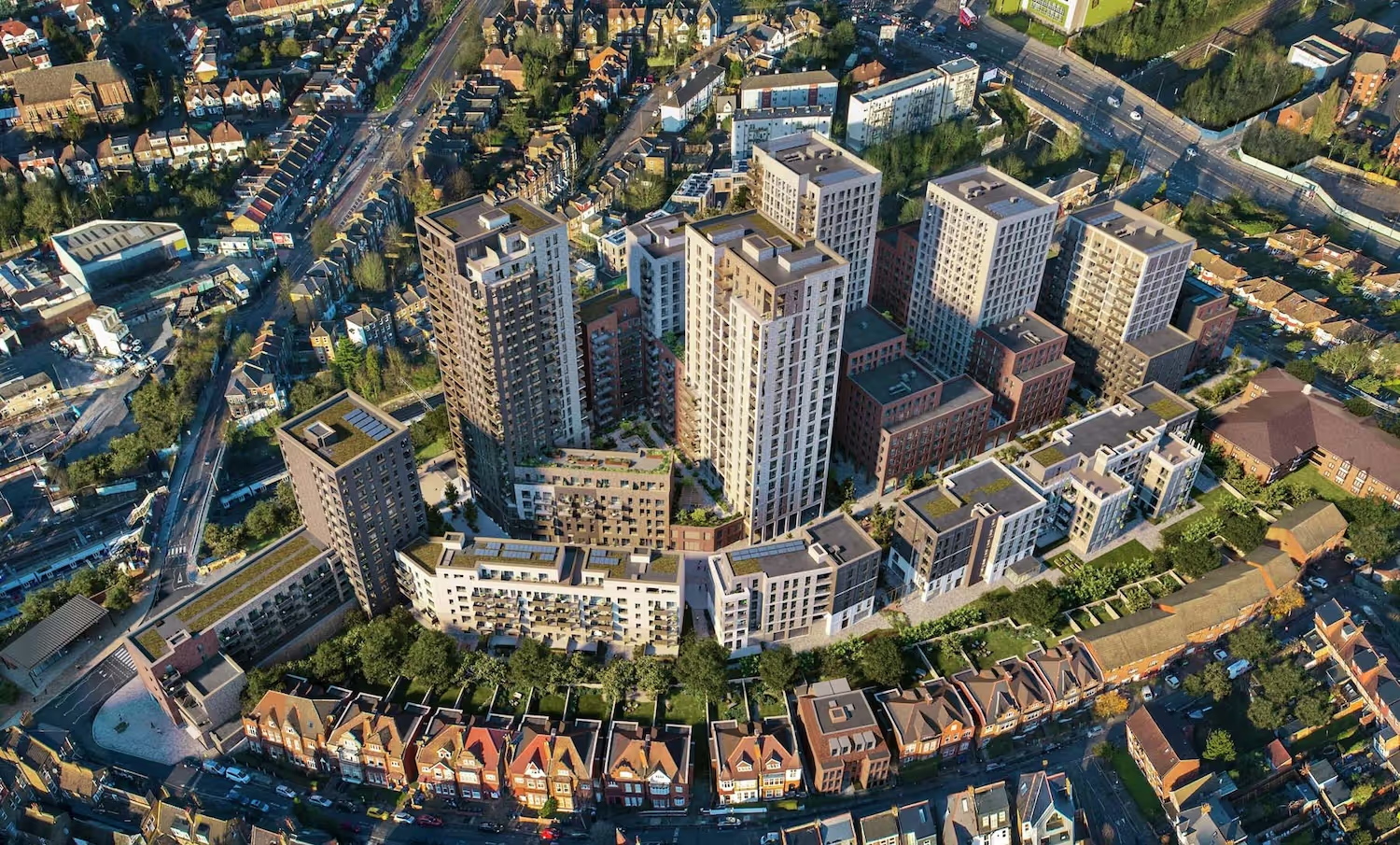
A letter from Hollis usually means you are one neighbour among many on a substantial scheme. The firm is an international real estate consultancy with one of the UK's largest in-house neighbourly matters teams, the kind of operation developers bring in when a project is big enough to affect a whole streetful of properties at once.
- Hollis is a major, well-regarded consultancy handling party wall, rights of light and daylight matters on large commercial and residential schemes. On this scheme, it is instructed by the developer.
- On multi-neighbour schemes, the first owners to sign set the benchmark for everyone who follows. Developers know this, which is why early offers reward speed rather than value.
- Your claim is yours, not the street's. Get it independently assessed before any figure is discussed. Check your claim free of charge.
Who are Hollis?
Hollis is an international real estate consultancy whose UK neighbourly matters practice is among the largest dedicated in-house teams in the country, covering party wall work (acting as building owner's, adjoining owner's or agreed surveyor), rights of light assessments at preliminary and detailed stages, daylight, sunlight and overshadowing studies, and scheme reviews. Its project experience includes advising on neighbourly matters for a 44-storey tower in Greater London described as the world's tallest modular building. The scale is the point: this is a firm built for developments with long lists of affected neighbours, and if its letter has reached you, your address is on one of those lists.
What does the size of the scheme mean for me?
Three things, and the first two favour you. First, large schemes carry large budgets for neighbour risk, because the cost of delay on a major project dwarfs the cost of settlements. Second, the developer's appetite for an unresolved claim is low: one neighbour with a credible, properly backed claim can complicate financing, insurance and programme in a way that has nothing to do with the size of their house. Third, and this is the one that favours the developer, multi-neighbour schemes are settled in waves. The professional team approaches owners in sequence, and the early, cheap signatures become the reference point for everyone after them. "Your neighbours at number 12 accepted" is a negotiating tool, not a valuation.
Should I compare notes with my neighbours?
Talking to neighbours is sensible and often reassuring; treating the street's average as your claim's value is not. Rights of light are assessed window by window, room by room. Your orientation, your room layouts, and how long your apertures have enjoyed light under the Prescription Act 1832 can put your claim in a different class from the identical-looking house two doors down. Coordinated neighbours can be harder for a developer to pick off one by one, but coordination is no substitute for knowing what your own position is worth. The developer's team certainly knows; their model scores every property separately.
What is the letter likely to contain?
The standard set. A request for access so surveys can be carried out: manage it on advice rather than refuse, since the conduct of both sides is weighed if a dispute later reaches court. A notification of the scheme, sometimes pointing out that party wall processes are also underway. An offer, or a deed of release prepared for signature: the permanent surrender of your right, binding on future owners of your home. Or correspondence about a light obstruction notice under the Rights of Light Act 1959, which carries a statutory clock and should go straight to an adviser. One caution specific to big schemes: party wall notices and rights of light approaches often arrive in the same period, from the same consultancy, and they are completely different legal animals. Signing party wall paperwork does not release your light, and a party wall award gives you no protection on light. Keep the two files separate in your mind and on your desk.
What should I do before responding?
Acknowledge receipt if asked, commit to nothing, sign nothing, and resist any framing that your claim is one row in a spreadsheet to be cleared. Then get an independent view of what your specific windows stand to lose and what that is worth to a developer who cannot afford an open claim on a project this size. Whether the claim can credibly reach court decides the rest: a claim that can is priced as risk; one that visibly cannot is priced as admin. The honest comparison of your options is here: claims company vs your own surveyor vs solicitor.
How can Daylight Protect help?
The Daylight Protect Claim Plan handles your whole claim on a no win, no fee basis. Specialist solicitors act for you, and insurance included in the plan pays the expert bills, the court fees and the other side's costs if the claim fails. Our fee is a percentage of your compensation, paid only when you win. Everything is set out in writing before you start, and if your claim is unsuccessful you pay nothing. On a scheme big enough to need Hollis, the developer's greatest fear is not a hundred grumbling neighbours. It is one properly backed claim that refuses to be averaged.
Find out what your claim is worth →
Daylight Protect is a litigation facilitator, not a firm of solicitors. We arrange and manage rights of light claims on a no win, no fee basis; legal work is carried out by independent specialist solicitors who act for you. Our fee is payable only if your claim succeeds.
Frequently asked questions
Is the letter from Hollis genuine?
Yes. Hollis is a major international consultancy and its letters are a standard part of how large schemes are delivered. Genuine, professional, and sent on the developer's instruction.
My neighbour already accepted an offer. Does that cap mine?
No. Their settlement releases their rights, not yours, and their figure reflects their windows, their advice and their appetite, none of which binds you. It may, however, be quoted at you. Treat it as the negotiating device it is.
The same firm is handling our party wall matters. Is that a problem?
It is normal on large schemes, but it makes one discipline essential: never let party wall paperwork and rights of light paperwork blur together. They are separate legal regimes, and only one of them comes with a statutory process. Your right to light is released only by a document that says so.
This article is general information about rights of light in England and Wales, not legal advice on your specific circumstances.
Joshua Platt BSc (Hons) MRICS, Director, Daylight Protect
Daylight Protect is a rights of light claims specialist operating across England and Wales. We provide a fully funded solution that covers everything end to end, the surveyor, the solicitor, counsel and court fees, backed by legal insurance that covers the developer's costs if a claim does not succeed. There is no recovery, no fee, and no costs to you either way. We tell you plainly when you have a claim, and just as plainly when you do not.