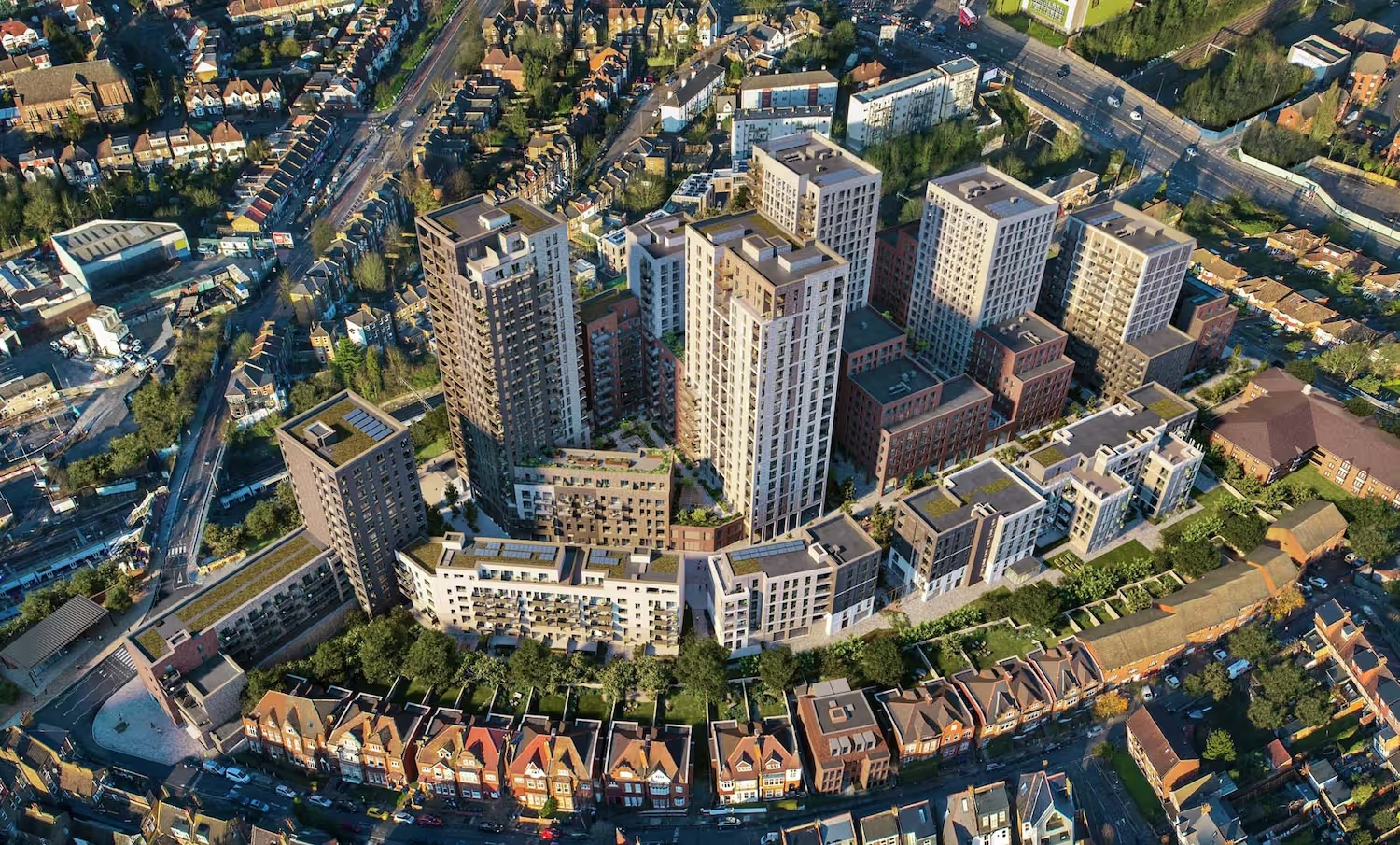
What does a letter from GIA mean for my property?
GIA has contacted you about a development affecting your light. What their letter means, why a budget for your claim likely already exists, and your next steps.
GIA has no connection with Daylight Protect. This is independent information for property owners who have received correspondence from them. All statements about the firm are drawn from its own published material and were checked on 11 June 2026.
A letter from GIA means your property has already been through one of the most sophisticated light-modelling operations in the UK, and in all likelihood a compensation figure for your claim was sitting in the developer's appraisal before the envelope was ever posted.
- GIA is a market-leading, technology-driven consultancy. On this scheme it acts for the developer, and its analysis was commissioned to protect the developer's position, not yours.
- GIA's own marketing describes helping clients understand the potential for rights of light injunctions and quantify compensation budgets. A budget line for neighbours like you usually exists before contact is made.
- The first figure you are shown is drawn from that budget. Take independent advice before responding to it. Check your claim free of charge.
Who are GIA?
GIA, originally Gordon Ingram Associates, was founded in 1993 and has grown into one of the UK and Ireland's leading practices for daylight, sunlight and rights of light, with offices including London, Manchester, Bristol, Belfast and Dublin and private equity investment behind its expansion. The firm is known for its technology: it co-founded the VU.CITY 3D city modelling platform and built Phoenix, a tool it promotes as optimising a development scheme's massing in under an hour. Its project list includes some of the country's most prominent buildings. None of this should worry you in itself, but it should tell you that the letter you received is not speculative. It is the output of a detailed model in which your windows are data points.
What does a letter from GIA mean for my property?
It means the developer's analysis identified your property as holding rights of light that the scheme would interfere with, or as being close enough to the line that the developer wants certainty. Developers do not pay specialist consultancies to write to neighbours whose claims don't matter. The practical translation: your position has value to this scheme, and the developer would prefer to acquire it by agreement now rather than face an unresolved claim later.
Has the developer already budgeted for my claim?
Very probably. GIA's own published material describes its work helping developers understand injunction risk and quantify compensation budgets for rights of light. That is entirely legitimate consultancy, and it has a direct consequence for you: by the time you receive a letter, the developer typically holds a schedule of affected properties with an allowance against each. Early offers are made from that allowance. They reflect what the developer hopes to settle for, and they are calibrated against a quiet assumption that most neighbours will not obtain independent advice, and that few could fund a dispute if it came to one.
What is the letter asking me to do?
Check it against the usual three. A survey or access request means their team wants to measure your windows or validate the model; manage this on advice rather than refusing point-blank, since conduct matters if a dispute later reaches court. A notification and offer is the opening number from the budget described above. An enclosed deed of release is the document that permanently surrenders your right to light, binds every future owner of your home, and converts the developer's unpriced risk into a closed file. If the letter references a light obstruction notice under the Rights of Light Act 1959, treat it as urgent: an unchallenged LON can defeat rights still accruing under the Prescription Act 1832.
What should I not do?
Do not sign anything. Do not name a figure, accept a figure, or describe your circumstances in detail. Do not assume planning permission has decided the matter; it has not, because rights of light are private rights the planning system cannot remove. And do not measure your claim against the developer's model alone. Their analysis answers what light is lost, but the value of your claim is set just as much by leverage: whether the developer's team believes you can afford to enforce your rights if they refuse to deal fairly.
Where does Daylight Protect fit in?
The Daylight Protect Claim Plan handles your whole claim on a no win, no fee basis. Specialist solicitors act for you, your own surveyor tests the developer's model, and insurance included in the plan pays the expert bills, the court fees and the other side's costs if the claim fails. Our fee is a percentage of your compensation, paid only when you win. Everything is set out in writing before you start, and if your claim is unsuccessful you pay nothing. The developer's side runs on data; ours makes sure the most important variable in their model, whether your claim is credibly backed, reads the way it should.
Find out what your claim is worth →
Daylight Protect is a litigation facilitator, not a firm of solicitors. We arrange and manage rights of light claims on a no win, no fee basis; legal work is carried out by independent specialist solicitors who act for you. Our fee is payable only if your claim succeeds.
Frequently asked questions
Is GIA's letter genuine?
Yes. GIA is a prominent, established consultancy and its letters are a routine part of professional development practice. Genuine, however, is not the same as neutral: on this scheme, the firm is instructed by the developer.
Should I trust the light loss figures in their report?
Treat them as the developer's evidence, competently produced. An independent surveyor, provided under this plan at no upfront cost to you, can test the model's inputs and assumptions before you rely on any conclusion drawn from it.
What happens if I just ignore the letter?
Nothing good. Silence will not stop the scheme, can weaken how a court later views your conduct, and does not pause a light obstruction notice if one is in play. You don't need to respond substantively straight away, but you should get advice straight away.
This article is general information about rights of light in England and Wales, not legal advice on your specific circumstances.